Introduction
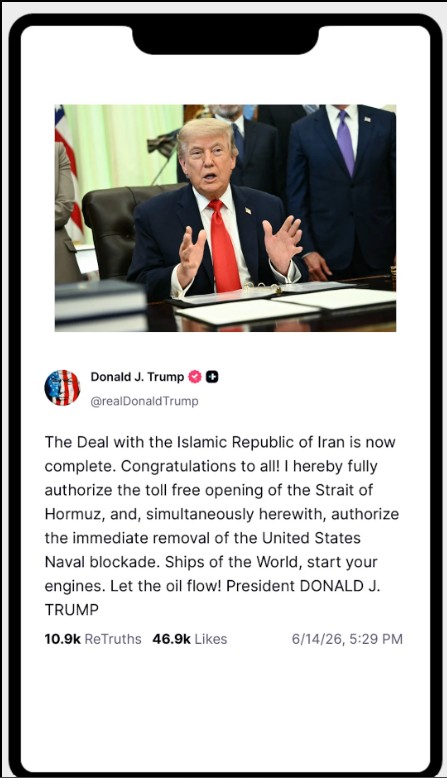
Global financial markets are reacting positively to reports of a preliminary peace agreement between the United States and Iran. After months of geopolitical uncertainty, investors are hopeful that easing tensions in the Middle East could reduce inflation pressures, stabilize energy markets, and support a broader rally across global stocks.
For traders, the Trump-Iran deal could become one of the most significant market-moving developments of 2026.
Why the Market Is Celebrating
One of the biggest concerns during the conflict was the disruption of the Strait of Hormuz [New York Times Report], a critical shipping route responsible for a large portion of global oil transportation.
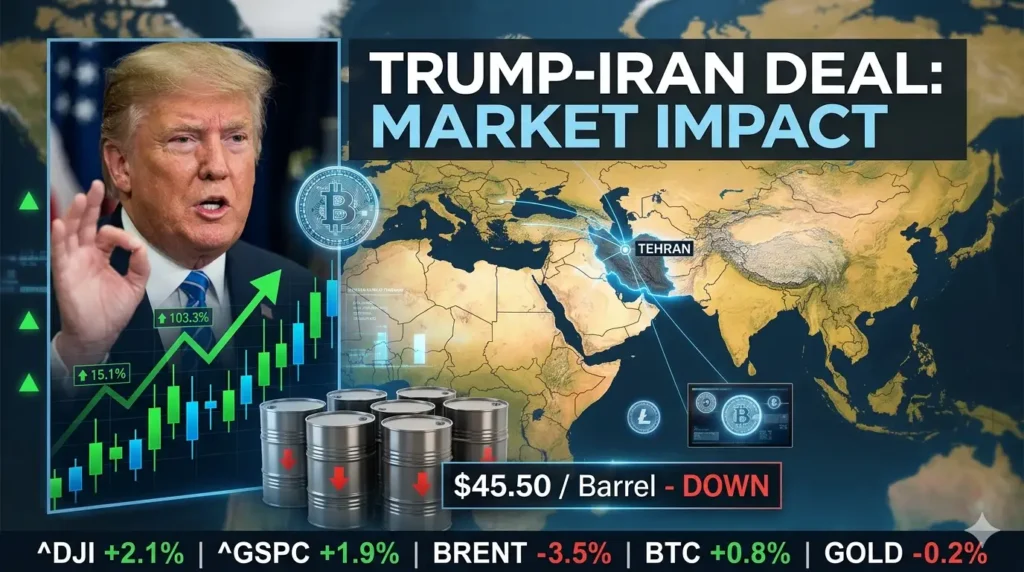
As news emerged that the United States and Iran had reached an agreement aimed at reopening the Strait of Hormuz, stock futures surged while oil prices moved sharply lower. Investors interpreted the development as a sign that global energy supplies could normalize in the coming months.
Trump-Iran Deal-Impact on Stock Markets
Bullish for Equities
A successful peace agreement generally creates a “risk-on” environment where investors move money into stocks and away from defensive assets.
Sectors that could benefit include:
- Technology stocks
- Consumer discretionary companies
- Airlines
- Manufacturing firms
- Transportation companies
Lower energy costs can improve corporate profitability and reduce inflation-related pressures on businesses.
Potential Boost for Growth Stocks
Technology companies are particularly sensitive to interest rate expectations.
If falling oil prices help reduce inflation concerns, central banks may face less pressure to maintain restrictive monetary policies, which could support higher valuations for growth stocks.
Trump-Iran Deal-Impact on Oil Markets
Oil has been one of the biggest drivers of market volatility throughout the conflict.
During periods of tension, traders feared disruptions to global energy supplies, pushing crude oil prices significantly higher.
A lasting Trump-Iran agreement could result in:
- Increased oil supply stability
- Lower crude oil prices
- Reduced transportation costs
- Improved global economic outlook
For traders, this means energy markets could remain highly volatile as negotiations continue.
Trump-Iran Deal-Impact on Gold
Gold typically performs well during periods of uncertainty and geopolitical risk.
If the Trump-Iran agreement progresses successfully, some investors may reduce their exposure to safe-haven assets such as gold and shift capital toward equities and higher-risk investments.
This could create short-term pressure on precious metals prices.
Trump-Iran Deal-Impact on Cryptocurrency Markets
Crypto markets often react to broader investor sentiment.
A reduction in geopolitical risk may encourage traders to increase exposure to:
- Bitcoin
- Ethereum
- Altcoins
- Crypto-related stocks
While cryptocurrencies remain volatile, improved global market sentiment could support a renewed appetite for risk assets.
What Traders Should Watch Next
Despite the positive market reaction, several uncertainties remain:
1. Official Signing of the Agreement
Investors will closely monitor whether both sides formally implement the proposed terms.
2. Sanctions Discussions
Future negotiations regarding sanctions and economic cooperation could influence market sentiment.
3. Oil Price Trends
Energy prices will likely remain a key indicator of whether investors believe the deal is sustainable.
4. Central Bank Policy
Lower energy prices could reduce inflation concerns and potentially improve the outlook for future interest rate decisions.
Final Thoughts
The Trump-Iran deal has the potential to become a major catalyst for global markets. Initial reactions suggest investors are optimistic about lower oil prices, easing inflation pressures, and stronger economic growth.
For stock traders, the development is largely positive. Technology, consumer, transportation, and growth sectors could benefit if tensions continue to ease. However, traders should remain cautious, as geopolitical agreements often face unexpected challenges during implementation.
As always, risk management remains essential. Markets may continue to experience significant volatility as additional details emerge in the coming weeks.