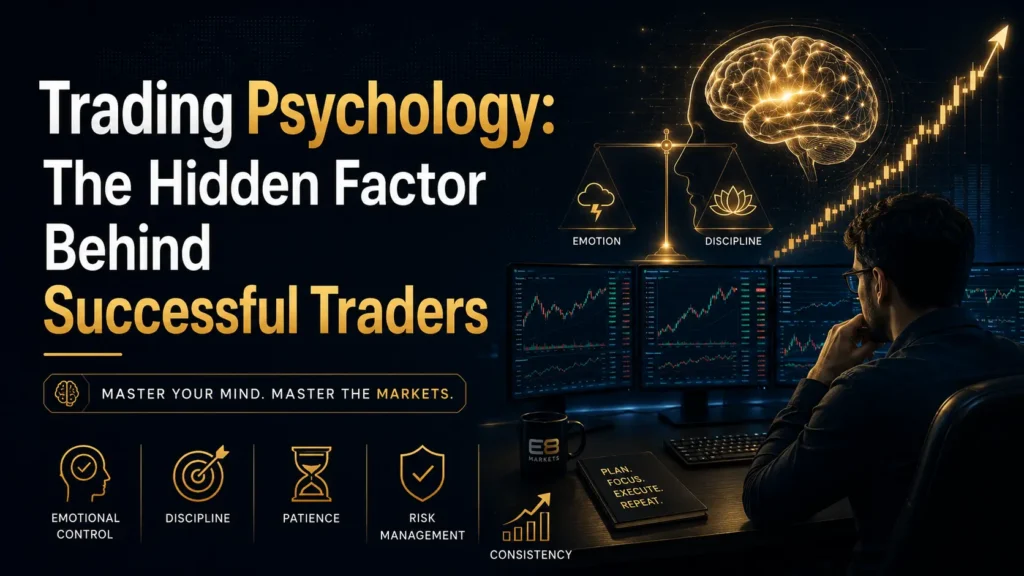
Most beginner traders spend countless hours learning technical indicators, chart patterns, and market analysis. While these skills are important, one critical factor often separates profitable traders from losing traders: trading psychology.
Successful trading is not just about finding the perfect strategy. It is about controlling emotions, managing risk, and maintaining discipline during both winning and losing streaks.
Why Trading Psychology Matters
Financial markets are driven by human behavior. Fear, greed, excitement, and panic influence trading decisions every day. Traders who allow emotions to control their actions often make costly mistakes.
Common psychological mistakes include:
- Holding losing trades for too long
- Closing winning trades too early
- Overtrading after losses
- Increasing position sizes emotionally
- Ignoring stop-loss levels
Developing the right mindset can significantly improve long-term trading performance.
The Role of Risk Management
Professional traders understand that protecting capital is more important than chasing profits. Risk management helps traders survive losing streaks and remain in the market for the long term.
Key risk management principles include:
Never Risk More Than You Can Afford to Lose
Many experienced traders risk only 1% to 2% of their trading capital on a single trade.
Use Stop-Loss Orders
A stop-loss helps limit potential losses and removes emotional decision-making from the trading process.
Maintain a Risk-to-Reward Ratio
A favorable risk-to-reward ratio ensures that profitable trades can outweigh losing ones over time.
Building Trading Discipline
Discipline is the foundation of consistent trading success. Traders should create a trading plan and follow it regardless of market conditions.
A strong trading plan typically includes:
- Entry criteria
- Exit strategy
- Risk management rules
- Position sizing guidelines
- Trading journal records
Keeping detailed records helps traders identify strengths and weaknesses in their approach.
How to Control Trading Emotions
Controlling emotions is easier said than done. However, traders can improve their emotional discipline by:
- Following a structured trading plan
- Avoiding revenge trading
- Taking regular breaks from the market
- Setting realistic expectations
- Focusing on long-term consistency instead of short-term gains
The goal is not to eliminate emotions but to prevent them from influencing trading decisions.
Final Thoughts
The most successful traders understand that psychology and risk management are just as important as technical analysis. A disciplined trader with a solid risk management plan often outperforms a trader with a perfect strategy but poor emotional control.
In today’s fast-moving financial markets, mastering trading psychology can provide the competitive edge needed for long-term success. Whether you trade forex, stocks, commodities, or cryptocurrencies, developing the right mindset may be the most valuable investment you ever make.