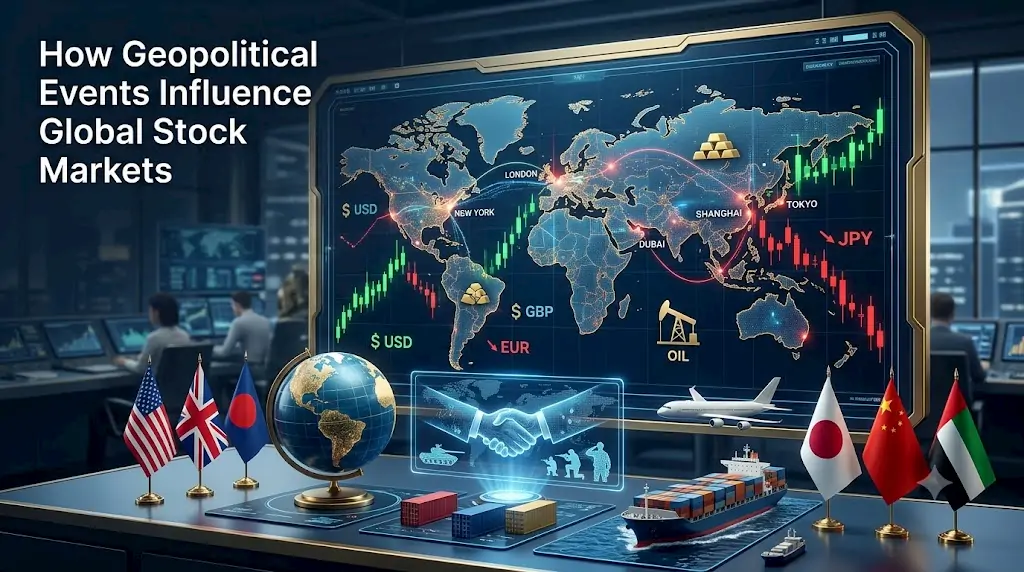
Financial markets are driven by more than just corporate earnings and economic data. Political developments around the world can have a profound impact on investor sentiment, asset prices, and market volatility. From elections and trade disputes to military conflicts and international sanctions, geopolitical events often shape the direction of global stock markets.
For investors, understanding these events is essential for managing risk and making informed decisions. While geopolitical uncertainty can create short-term volatility, it can also present long-term investment opportunities for those who remain disciplined.
In this article, we’ll explore how geopolitical events influence global stock markets, the sectors most affected, and strategies investors can use to navigate uncertain times.
What Are Geopolitical Events?
Geopolitical events are political or international developments that affect relationships between countries and influence global economic activity.
Examples include:
- Wars and military conflicts
- National elections
- Trade disputes and tariff policies
- Economic sanctions
- Diplomatic tensions
- Political instability
- Terrorist attacks
- Energy supply disruptions
- Border conflicts
- International treaties and alliances
These events can change investor expectations about economic growth, corporate earnings, inflation, and global trade.
Why Stock Markets React to Geopolitical News
Financial markets dislike uncertainty.
Whenever major geopolitical events occur, investors quickly reassess potential risks to businesses and economies. This often leads to increased market volatility as traders adjust their portfolios.
Common market reactions include:
- Falling stock prices
- Increased demand for safe-haven assets
- Higher market volatility
- Currency fluctuations
- Changes in commodity prices
The severity of the reaction depends on the scale of the event and its expected economic impact.
1. Wars and Military Conflicts
Military conflicts are among the most significant geopolitical risks.
Wars can disrupt:
- Global supply chains
- Energy production
- International trade
- Manufacturing
- Consumer confidence
Industries such as defense may benefit from increased government spending, while sectors like tourism, aviation, and retail often face greater pressure during prolonged conflicts.
2. Elections and Political Leadership Changes
National elections can significantly influence investor confidence.
Markets closely monitor:
- Tax policy proposals
- Government spending plans
- Regulatory changes
- Infrastructure investments
- Trade policies
A clear election outcome often reduces uncertainty, while contested elections or unstable coalition governments can increase market volatility.
3. Trade Wars and Tariffs
Trade disputes between major economies can affect businesses worldwide.
Higher tariffs may increase production costs, reduce international trade, and lower corporate profits.
Companies heavily dependent on imports or exports are particularly vulnerable.
Investors often monitor trade negotiations between leading economies because these developments can influence manufacturing, technology, agriculture, and transportation sectors.
4. Economic Sanctions
Economic sanctions restrict trade and financial activity with targeted countries.
These measures may affect:
- Banking
- Energy companies
- Commodity markets
- Global supply chains
- International investments
Businesses with significant international exposure may experience earnings pressure when sanctions disrupt normal operations.
5. Oil and Energy Supply Disruptions
Energy markets are highly sensitive to geopolitical developments.
Conflicts involving major oil-producing regions can cause:
- Rising crude oil prices
- Increased inflation
- Higher transportation costs
- Reduced corporate profit margins
Energy-producing companies may benefit from higher prices, while industries with high fuel costs often face additional challenges.
6. Currency Market Volatility
Political uncertainty frequently affects foreign exchange markets.
Currencies may strengthen or weaken depending on:
- Investor confidence
- Interest rate expectations
- Capital flows
- Government stability
Currency fluctuations can also influence multinational corporations by affecting overseas revenues and operating costs.
7. Investor Sentiment and Market Psychology
Market psychology plays a major role during geopolitical crises.
Negative headlines can trigger:
- Panic selling
- Flight to quality
- Reduced investment activity
- Increased volatility
Conversely, positive diplomatic developments or peace agreements often restore investor confidence and support market recoveries.
Understanding market sentiment helps investors avoid emotional decision-making during periods of uncertainty.
Which Sectors Are Most Affected?
Typically Negatively Affected
- Airlines
- Tourism
- Hospitality
- Consumer discretionary
- Manufacturing
- Automotive
May Benefit
- Defense companies
- Cybersecurity firms
- Energy producers
- Gold mining companies
- Utility companies
Sector performance often depends on the nature and duration of the geopolitical event.
Safe-Haven Assets During Geopolitical Uncertainty
When uncertainty rises, investors often shift capital toward assets considered relatively defensive.
Common safe-haven investments include:
- Gold
- U.S. Treasury securities
- High-quality government bonds
- Defensive dividend-paying stocks
- Certain reserve currencies
These assets may help reduce portfolio volatility during periods of market stress.
How Investors Can Manage Geopolitical Risk
While geopolitical events cannot be predicted with certainty, investors can take steps to reduce their impact.
Best practices include:
- Diversify across sectors and regions.
- Maintain a long-term investment perspective.
- Avoid emotional buying and selling.
- Monitor major political and economic developments.
- Review portfolio allocations regularly.
- Keep adequate cash reserves for opportunities during market declines.
Preparation and discipline are often more valuable than attempting to predict every headline.
Key Takeaways
- Geopolitical events can significantly influence stock market performance.
- Political uncertainty often increases market volatility.
- Different sectors respond differently depending on the event.
- Diversification and risk management remain essential.
- Long-term investors should focus on fundamentals rather than reacting to short-term news.
Final Thoughts
Geopolitical events are an unavoidable part of global investing. While wars, elections, trade disputes, and diplomatic tensions can create short-term uncertainty, history has shown that financial markets often adapt over time.
Successful investors recognize that volatility is a normal feature of the market. By maintaining a diversified portfolio, focusing on long-term objectives, and avoiding emotional decisions, investors can navigate geopolitical uncertainty more effectively and remain positioned for future opportunities.
Disclaimer: This article is for educational and informational purposes only and should not be considered financial or investment advice. Always conduct your own research and consult a qualified financial advisor before making investment decisions.